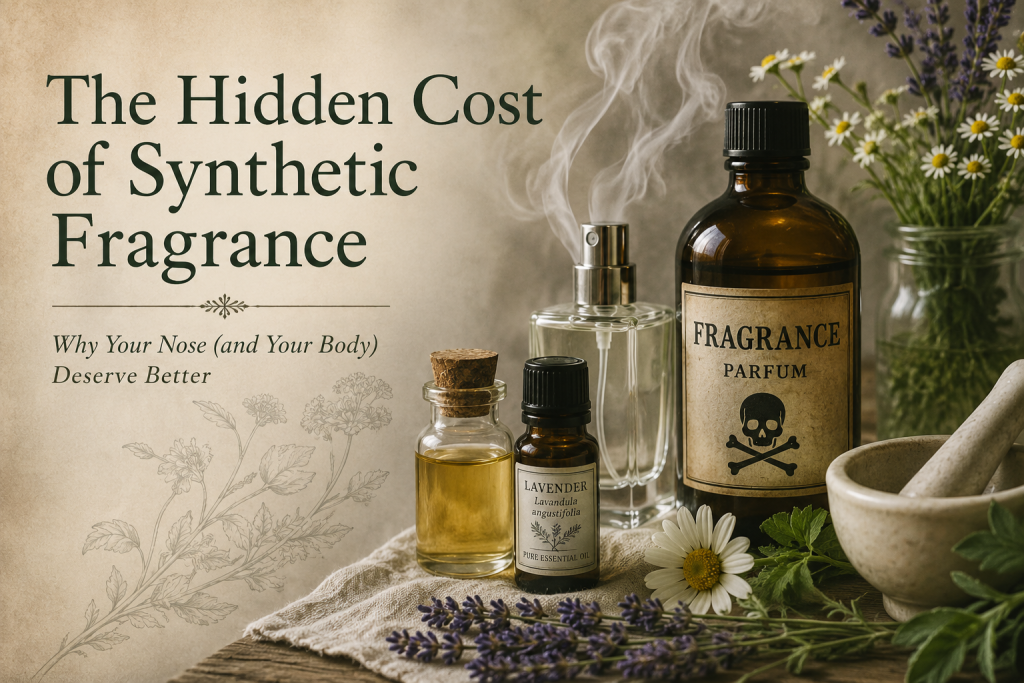
Walk down the cleaning aisle of almost any store, and you’ll be bombarded by the smell of “fresh linen,” “mountain breeze,” “apple pie,” and “ocean mist.” Candles promise cozy evenings. Laundry detergents boast weeks of lasting fragrance. Air fresheners claim to eliminate odors with a single spray.
It all promises something beautiful… and clean.
But are they clean? Most people don’t realize that the mystery ingredient simply listed as “fragrance” may be one of the most chemically charged ingredients in their home.
The Mystery Ingredient Called “Fragrance”
When you read an ingredient label, you probably expect to know what’s inside the product you’re buying.
But even if a product appears to contain mostly natural ingredients, there’s one word that deserves a closer look: Fragrance.
That single word can legally represent dozens—or even hundreds—of individual chemicals. In the United States, manufacturers are generally allowed to keep fragrance formulations confidential because they’re considered proprietary trade secrets. As a result, consumers often have no idea what they’re actually breathing or applying to their skin.
Why This Matters
Your sense of smell is remarkable. The olfactory nerve provides a direct pathway from your nose to your brain, and every breath carries aromatic molecules into your body. Many personal care products also remain on your skin for hours after they’re applied.
While not every synthetic fragrance ingredient shares the same risk, some commonly used fragrance chemicals have raised concerns among researchers for their potential to:
- Trigger headaches or migraines
- Irritate the skin, eyes, or respiratory system
- Aggravate asthma or allergies
- Contribute to indoor air pollution
- Cause allergic contact dermatitis
- Hormone disruption: Interfere with normal hormone signaling
Scientists continue to study many of these ingredients, and regulations vary from country to country. What is clear is that fragrance sensitivity has become increasingly common.
Why So Many People Are Sensitive Today
Have you ever walked past someone wearing perfume and instantly gotten a headache? Or walked into a hotel room only to be overwhelmed by the smell of heavily scented cleaning products?
You’re not imagining it. Modern life surrounds us with fragrance from every direction:
- Laundry products
- Dryer sheets
- Shampoo & Conditioner
- Soaps & Lotions
- Perfumes & Deodorant
- Household cleaners
- Candles
- Air & car fresheners
- Scented trash bags
- Plug-in fragrance devices
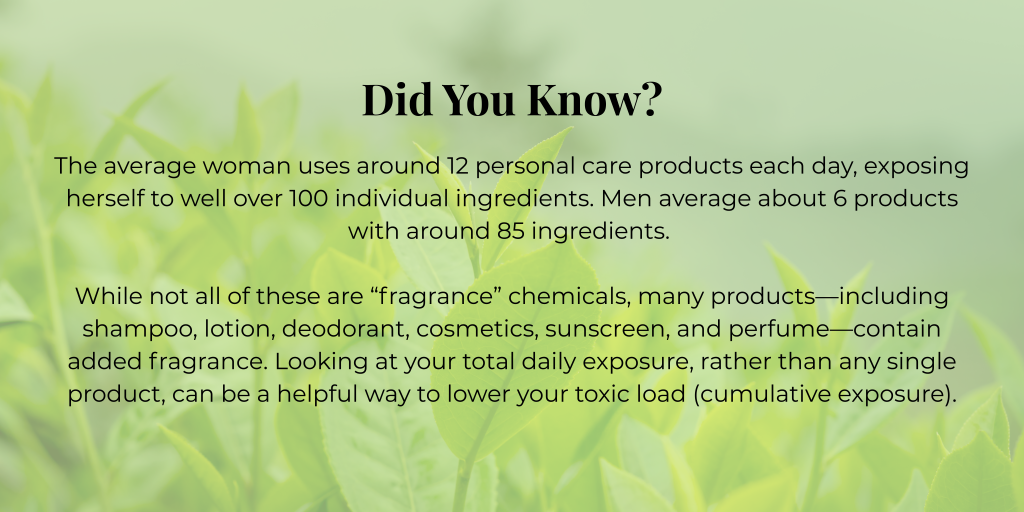
Each product may seem harmless on its own, but together they create nearly constant exposure throughout the day.
“Unscented” Doesn’t Always Mean Fragrance-Free
This surprises many people. Some products labeled unscented still contain fragrance chemicals.
Manufacturers sometimes add masking fragrances designed to neutralize or cover the natural odor of the ingredients without leaving a noticeable scent behind.
The Beauty of Real Plant Aromas
One of the reasons we appreciate authentic botanicals is that their aroma comes directly from the plant itself—not from a laboratory recreation of what someone thinks a meadow, vanilla cookie, or tropical breeze should smell like.
Real lavender smells like lavender. Real peppermint smells like peppermint. Frankincense carries the warm, resinous aroma that has been treasured for thousands of years.
Nature doesn’t need to imitate itself! We honestly cannot do better than the Creator of these precious plants!
Small Changes Can Make a Big Difference
You don’t have to throw everything away overnight. Many people simply begin by replacing one product at a time.
- Switch to a botanical-scented, natural soap.
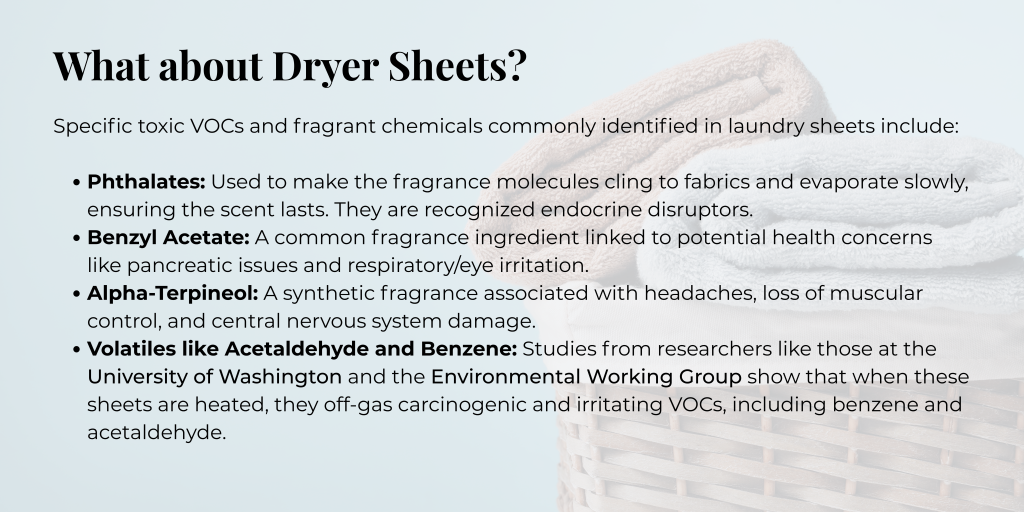
- Use wool dryer balls with essential oils instead dryer sheets. (Note: Try looking up what the chemicals in a dryer sheet can do to a dog)
- Then methodically swap out other laundry, cleaning, and personal care products for more natural options.
Baby steps.
Over time, something interesting often happens.
As you lower your toxic load, your nose adjusts, the overpowering scents that once seemed normal may begin to feel overwhelming. In fact, don’t be surprised if you notice you don’t like that “fake smell” anymore!
Many people discover they can once again appreciate the subtle beauty of real herbs, flowers, woods, and citrus. Take is as a sign that your body is healing!
Our Philosophy at Thorn & Thistle
At Thorn & Thistle Apothecary, we believe wellness begins with paying attention.
Reading labels.
Asking questions.
Choosing ingredients you recognize whenever possible.
We aren’t interested in fear-based marketing or making anyone feel guilty.
Instead, we simply want to encourage curiosity. The more we learn about what we’re bringing into our homes and putting on or in our bodies, the more empowered we become to make intentional choices.
Sometimes, the simplest ingredients are the most beautiful.
And sometimes, the sweetest fragrance is the one that came from a flower—not a factory.
But WHY?
If synthetic fragrances raise so many questions, why are they found in so many products?
The answer is surprisingly simple: they solve several problems for manufacturers.
Synthetic fragrance ingredients are often far less expensive than obtaining aromatic compounds directly from plants. They’re also remarkably consistent. While the aroma of a lavender harvest may vary slightly from year to year depending on weather, soil, and growing conditions, a synthetic fragrance can smell exactly the same every single time.
They’re also designed to last.
Many synthetic fragrance ingredients are engineered to linger for days—or even weeks—which is why laundry can still smell “perfumed” long after it comes out of the dryer. For many consumers, long-lasting scent has become associated with cleanliness, even though scent and cleanliness are not the same thing.
Synthetic fragrances also make it possible to create aromas that don’t naturally exist. There is no essential oil of “fresh linen,” “ocean breeze,” or “mountain air.” Those familiar scents are carefully crafted blends designed to evoke a feeling or memory rather than replicate a real botanical aroma.
At Thorn & Thistle, we believe knowledge is empowering. We simply encourage people to know what’s in the products they bring into their homes, so they can decide what aligns best with their family’s values and wellness goals.
Healthy Choices = Freedom